Up north, everyone knows late fall or winter is "tree removal season" — dormant trees, bare branches, frozen ground. In Florida, none of that applies. We don't have a true dormant season, hurricanes run June through November, and the heat is relentless. So when is the best time to remove a tree in Tampa Bay? The answer depends on why you're removing it.
The Florida Season Breakdown
Winter (December – February): The Closest Thing to Ideal
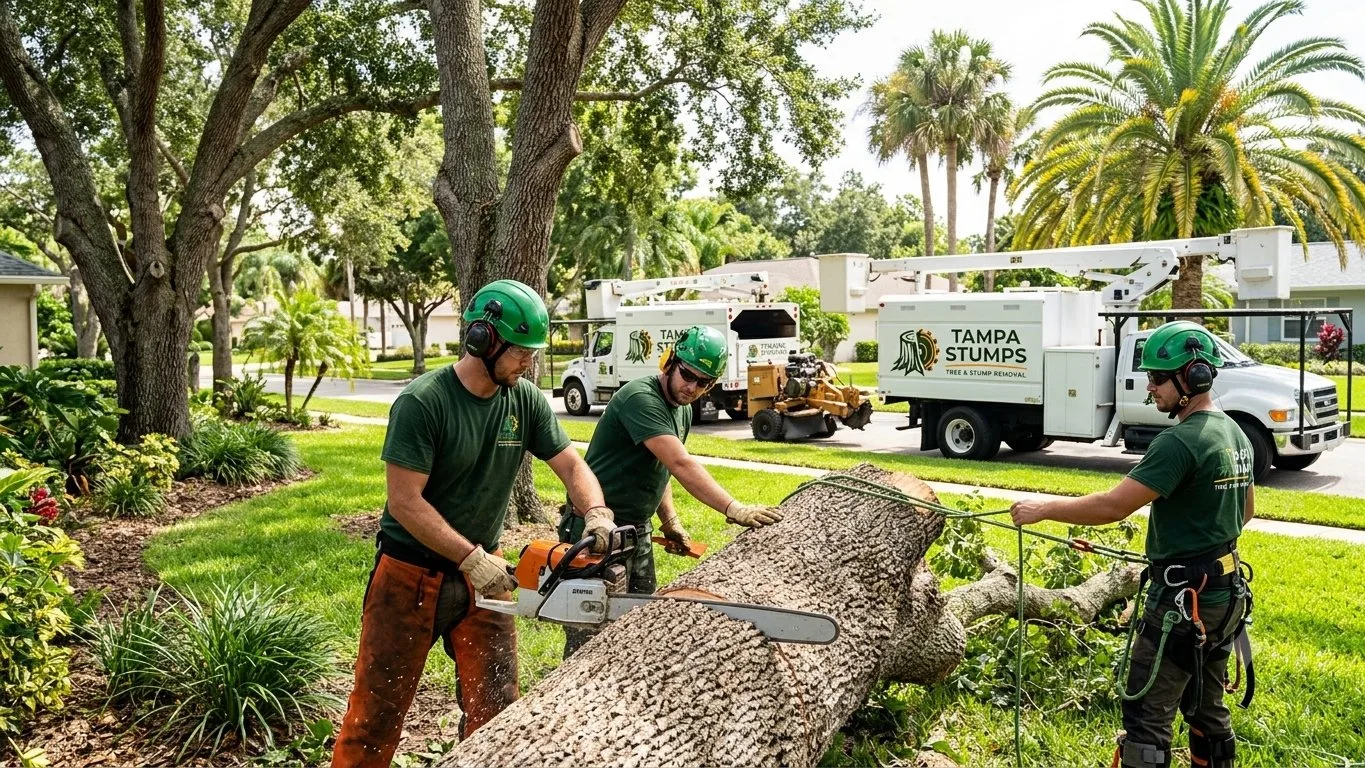
Florida's mild winter offers the best overall conditions for elective tree removal. Temperatures are comfortable for crews, afternoon thunderstorms are rare, and many deciduous trees (live oaks, maples, sweet gums) have reduced sap flow — meaning less mess and slightly less stress on the surrounding landscape. Pest and disease pressure is also at its seasonal low, which matters if you're removing a sick tree to prevent spread.
Best for: Large planned removals, multiple trees, projects near the house or pool cage where precision matters.
Spring (March – May): Work the Window
Early spring — March through mid-April — is a solid second choice. The weather is dry, temperatures are pleasant, and hurricane season hasn't started. Once May hits, the daily afternoon thunderstorm pattern begins returning, and scheduling becomes less predictable. If you have a tree you've been meaning to deal with, spring is your last easy window before summer.
Best for: Any removal you've been putting off. Don't wait until June.
Summer / Hurricane Season (June – November): Urgent Cases Only
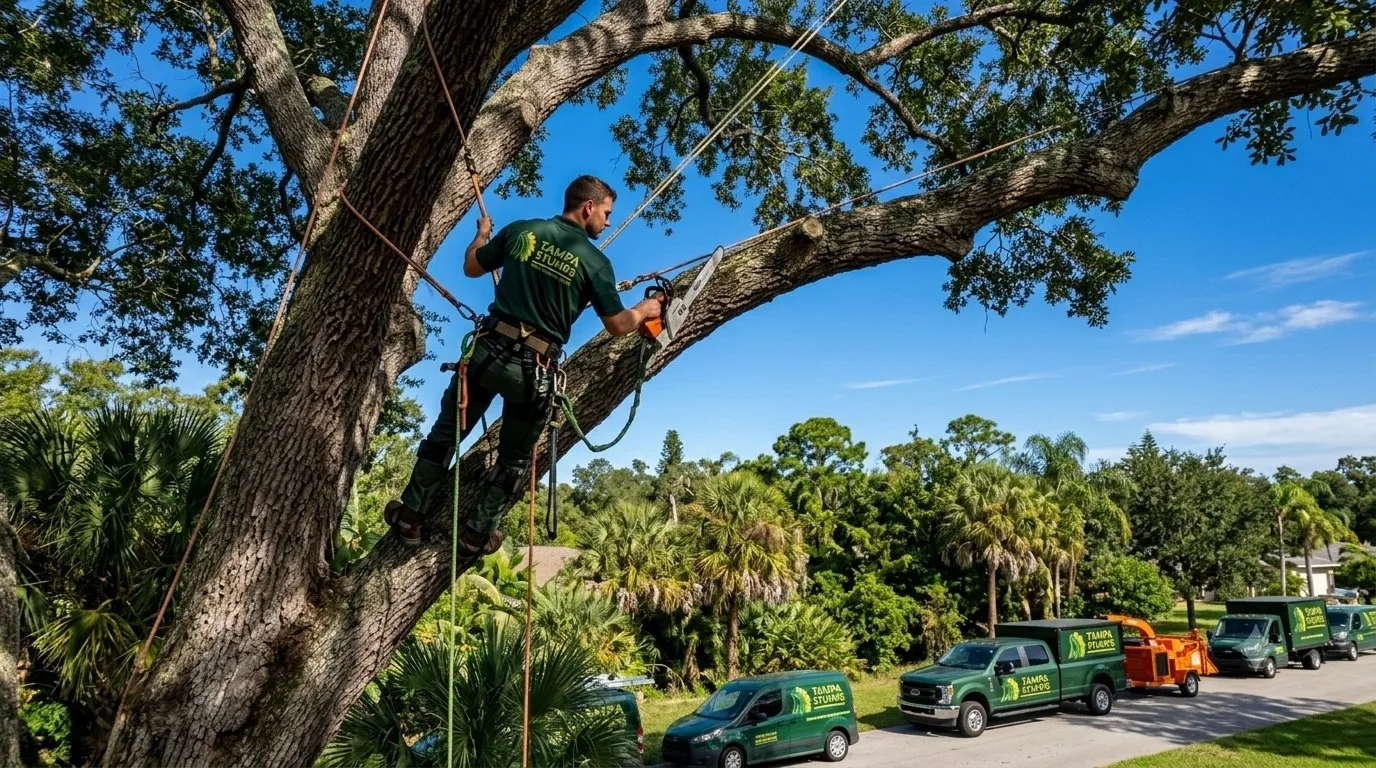
Summer isn't ideal for elective work — heat and afternoon storms make scheduling unpredictable — but it's absolutely the time for emergency removals. Storm-damaged trees, trees leaning toward structures, trees that dropped limbs in a squall: these can't wait until winter. The risk of a compromised tree failing in the next storm is real, and the liability is significant.
Post-hurricane removal demand spikes dramatically. If you wait two weeks after a major storm, you'll be competing with hundreds of other homeowners for a slot. The trees that are truly dangerous get prioritized, but calling early — ideally before a storm makes landfall — secures your place in the queue.
Best for: Emergency removal, storm damage, any tree posing immediate danger to structures or people.
The #1 Factor That Overrides Season: Safety
The best time to remove a dangerous tree is right now. Seasonal timing is a scheduling optimization, not a rule. If any of the following apply, don't wait for "the right season":
- The tree is leaning toward a structure, vehicle, or utility line
- You see large dead branches over 2 inches in diameter ("widow makers")
- The base shows signs of rot, fungal growth, or soil heaving
- The tree lost significant structure in a storm
- Roots are lifting foundations, pavers, or pool decking
- A certified arborist has recommended removal
What About Stump Grinding?
Stumps can honestly be ground year-round in Florida — there's no freeze cycle to worry about. The main consideration is lawn recovery. If you grind in spring before sod season, the disturbed soil can be re-sodded quickly. Grind in summer and the re-established grass will need extra watering. Either way, most homeowners fill the void with topsoil and lay new sod within a few weeks of grinding.
Florida-Specific Timing Considerations
| Season | Pros | Cons | Best For |
|---|---|---|---|
| Winter (Dec–Feb) | Mild temps, dry weather, reduced pests | Busier schedule due to demand | Large, planned removals |
| Spring (Mar–May) | Pleasant weather, pre-storm season | Book early before busy season | Backlog clearance before summer |
| Summer (Jun–Sep) | Emergency capacity available | Storms, heat, high demand post-event | Emergency / storm damage |
| Fall (Oct–Nov) | Storm season winding down | Still warm, occasional late storms | Post-storm cleanup, catch-up |
Pro Tip: Schedule Ahead of Hurricane Season
Every year, tens of thousands of Tampa Bay homeowners realize in mid-June that they have a questionable tree they should have dealt with in March. By then, removal companies are slammed, and you're looking at longer wait times and potentially higher demand pricing. If you have a tree you're unsure about, get a free assessment in the spring. Worst case, you get peace of mind. Best case, you remove a liability before it becomes a problem.
Schedule Your Free Assessment
Not sure if your tree needs to come down — or just want to get it on the calendar before hurricane season? We'll give you an honest assessment at no charge.
Get a Free Quote Call (813) 680-3844